
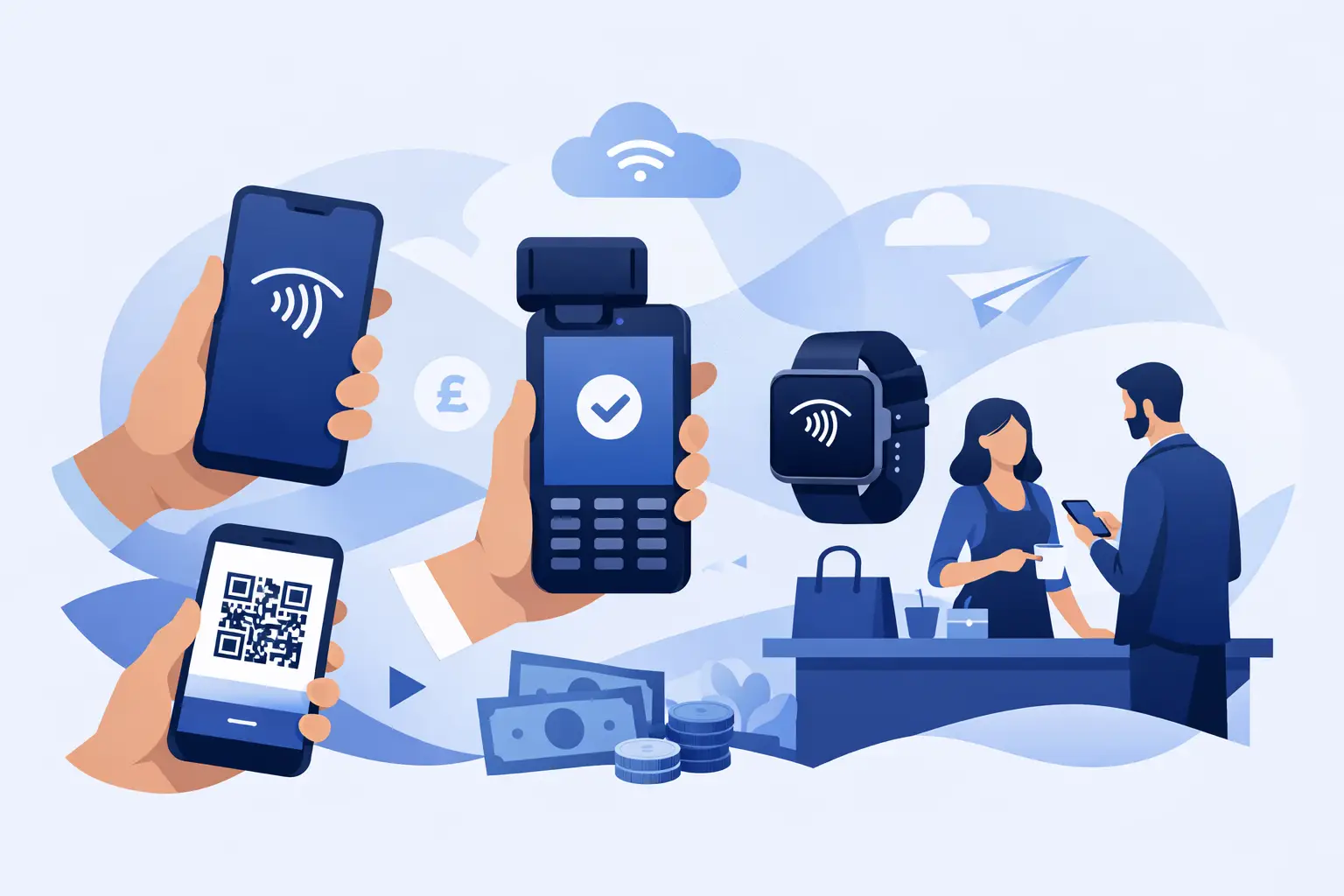
A kitchen installation is complete, a repair has been signed off, or a clinic appointment has finished. The customer is ready to pay, but bringing out a card terminal can mean a percentage fee on a large transaction, a poor signal or an awkward wait. The best alternatives to card terminals give customers a simple way to pay while giving your business more control over cost, confirmation and follow-up.
For UK businesses collecting deposits, stage payments and job balances of £250 or more, the right option depends on the payment type and how quickly you need cleared, traceable confirmation. A card machine is not the only professional way to collect money, and it is rarely the only option worth considering.
Why businesses look beyond card terminals
Card terminals are useful for quick, lower-value payments made in person. They are familiar to customers, and tapping a card is convenient when someone is at a till or on site. The trade-off becomes more noticeable when payments are larger. A percentage-based processing charge rises with the value of the job, even though the work of collecting the payment has not necessarily increased.
There can also be practical friction. A mobile terminal relies on battery life and signal. Staff may need to pair it with a phone, enter an amount carefully and wait for a receipt. For trades, garages and home-improvement teams, the person completing the work is often not the person who deals with payment administration.
Many businesses default to giving customers bank details instead. That may avoid card fees, but it often replaces one problem with another: checking accounts, matching vague references, chasing promised payments and asking customers to re-enter details manually. A better alternative should reduce that admin, not merely move it elsewhere.
Best alternatives to card terminals for larger payments
Pay-by-Bank payment requests
For one-off deposits, invoices and job balances, a Pay-by-Bank request is often the strongest alternative to a terminal. You create a request with the exact amount and a clear reference, then send it by WhatsApp, SMS, email or as a QR code. The customer selects their bank, approves the payment in their own banking app and receives the usual bank security checks.
This works particularly well when you are collecting a £500 deposit for a bathroom refit, the balance for a new boiler, a vehicle repair bill or a professional-services invoice. Rather than asking the customer to type in account details and a reference, you give them a defined payment journey. They know what they are paying for, and you can see the payment status without relying on a screenshot or a verbal promise that it has been sent.
The financial model also matters. Kube Pay is designed for payments over £250 and charges a fixed £1 per payment, rather than taking a percentage of the amount collected. That can make costs easier to predict when job values vary significantly.
Pay-by-Bank is not a universal replacement for every card payment. It depends on the customer using a participating bank and being able to approve the payment through their banking app or online banking. It is most useful where there is time for a customer to open a request, rather than at a fast-moving retail counter with a queue behind them.
Online card payment links
A card payment link removes the need for a physical terminal. You send a customer to a hosted checkout page, where they enter their card details and pay remotely. This can be a good fit where customers strongly prefer cards, where they are paying from a laptop, or where your business needs to accept overseas cards.
It solves the hardware issue, but not necessarily the economics. The payment still runs through the card network, so percentage charges usually remain relevant for larger invoices. It may also require customers to type card details, which adds a little more effort than approving a payment in their bank app.
Use a card payment link when card acceptance itself is essential. Consider Pay-by-Bank where the priority is a straightforward bank payment with a fixed, known collection cost.
Properly structured invoice payments
An invoice remains valuable, especially when your customer needs a document for their accounts team or must approve work before payment. For commercial clients, a clear invoice with a job description, payment terms, due date and purchase order reference can prevent disputes and make internal approval easier.
The limitation comes when the invoice contains only bank details. The customer still has to set up the transfer themselves, and your team still has to reconcile it afterwards. Adding a defined payment request to an invoice process gives you both the document and an easier route to payment. It also means the payment reference can be set before the customer pays, rather than guessed after the money arrives.
For businesses that bill after work is complete, invoices and payment requests are often better partners than invoices and manual transfer instructions.
Direct debit for recurring collections
Direct debit is useful when the same customer pays a regular, variable or fixed amount, such as a monthly service plan, finance arrangement or ongoing maintenance agreement. Once a mandate is in place, collections can be scheduled instead of requested each time.
It is less suitable for a one-off deposit or a balance due when a project finishes. Setting up a mandate can feel disproportionate for a single transaction, and the timing is not always as immediate as a customer authorising a payment request on the spot. Think of direct debit as a recurring-payment tool, not a default replacement for taking a job payment.
Cash and cheque
Cash can be appropriate for small payments in some sectors, but it creates handling, security and record-keeping work. Cheques introduce clearance delays and uncertainty. Neither gives most growing businesses the professional, trackable collection process they need for larger values.
How to choose the right card terminal alternative
Start with the moment payment is due. If customers usually pay while you are physically with them and the amount is modest, a terminal may still be the sensible choice. Convenience has value, particularly for quick retail transactions.
If you collect deposits before work begins, request milestone payments during a project or send balances once a job is complete, consider what happens after you ask for money. Can the customer pay from a message they already use? Will the amount and reference be correct? Can your office see whether the payment has been approved? Will a receipt and record be available without someone searching through bank statements?
Four practical questions will usually narrow the choice:
- Is this a one-off payment, a staged job payment or a recurring collection?
- Is the amount high enough that percentage card charges affect your margin?
- Does the customer need to pay remotely, on site, or either?
- Can your team identify the payment and follow up without manual chasing?
For many trade and service businesses, the answer is not to remove cards entirely. It is to use the payment method that suits the transaction. Keep a terminal for small in-person payments if it earns its place, while using a payment request for the larger deposits and balances where cost and administration matter more.
What a professional Pay-by-Bank process looks like
The strongest payment journeys are clear for both sides. Your team creates a request with the amount, customer details and job reference. It is shared through the channel the customer is most likely to see, whether that is a text after a call-out, a WhatsApp message from the installer or an email alongside an invoice.
The customer then authorises the payment securely with their own bank. They do not give your business their bank login details, and your business does not need to collect or store card details. Once the payment has been approved, a status update, confirmation and receipt create a record for the customer and your team.
That structure is what separates a managed collection process from simply texting over sort code and account number. Features such as reminders, branded request pages, reporting and CSV exports may sound administrative, but they reduce the time spent asking whether money has arrived and identifying what it relates to.
Security should be simple to explain
Customers may ask whether paying through open banking is safe, particularly if they have only used cards before. The useful explanation is straightforward: they are redirected to their own bank or banking app, where they log in and approve the payment using the security methods their bank already requires.
A reputable Pay-by-Bank service uses regulated open-banking payment initiation infrastructure. Your business does not see or handle a customer's banking credentials. That is reassuring for customers, but it also helps your team present payment as a normal, professional next step rather than an informal request for a transfer.
The best payment method is the one that fits the job, the customer and the value involved. When a large payment is due, make it easy to approve, easy to confirm and easy for your team to account for. That is usually a better outcome than leaving a valuable invoice to be chased.