
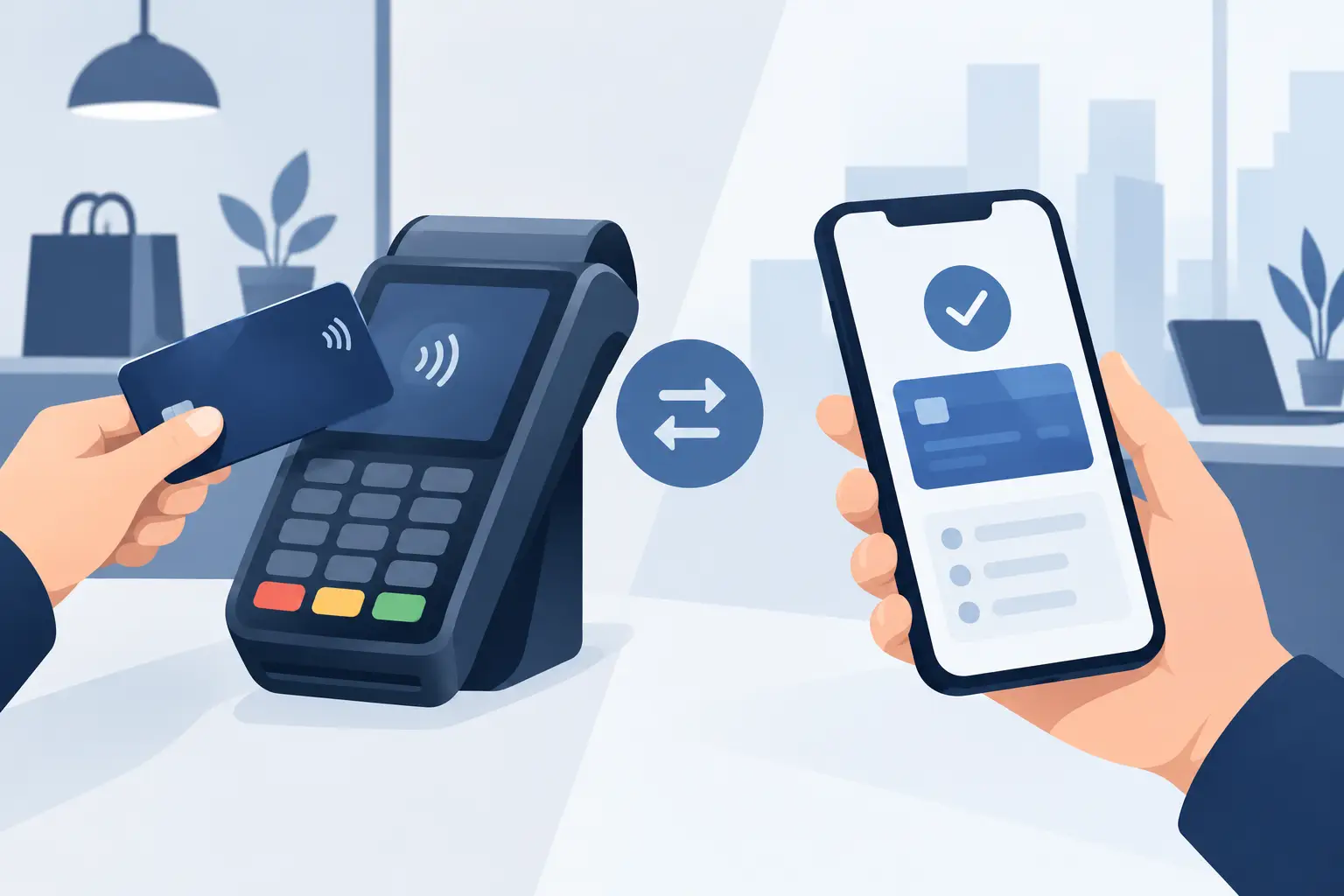
A £3,000 kitchen deposit, £1,200 vehicle repair or £750 clinic treatment can be agreed in minutes, then sit unpaid because the customer needs to make a transfer later. That is where the choice between card terminals versus bank apps becomes more than a payment preference. It affects your margin, your cash flow and how much time your team spends chasing money that should already be in motion.
For smaller, everyday purchases, a card terminal is often familiar and convenient. For higher-value deposits, invoices and job payments, a Pay-by-Bank request authorised in the customer’s own banking app can be a more controlled and cost-conscious route. Neither method is right for every transaction. The useful question is which one fits the way your business gets paid.
Card terminals versus bank apps: the practical difference
A card terminal takes payment from a debit or credit card. The customer taps, inserts or enters their card details, and the business pays a processing fee that is usually linked to the transaction value. It works particularly well at the counter, at the end of a small job, or where a customer expects to pay there and then by card.
A bank-app payment request takes a different path. The business creates a request for a defined amount and reference, then sends it by WhatsApp, SMS, email or QR code. The customer opens the request, selects their bank and approves the payment securely in their own banking app. The funds move directly between bank accounts through open banking.
This is not the same as sending bank details and hoping the customer types the right reference. A structured request gives both sides a clear payment journey: the amount is set, the reference is attached and the business can see the payment status rather than searching a bank statement for an unlabelled transfer.
For a roofer collecting a stage payment, a garage releasing a repaired car or a solicitor's office requesting an invoice payment, that difference can remove a familiar weak point in the process: the gap between saying “I’ll transfer it later” and actually receiving the money.
The fee question matters more as values rise
Card payments are often easy to accept because the cost can feel small on a modest sale. On a larger payment, a percentage-based fee grows with the value of the transaction. That makes it worth looking beyond convenience alone.
If you regularly take deposits of £250 or more, ask what each payment method costs in pounds, not just in percentages. A payment method that is perfectly reasonable for a £30 accessory sale may be less attractive for a £5,000 conservatory deposit.
Pay-by-Bank services can offer a fixed-fee alternative for these larger payments. Kube Pay, for example, charges a flat £1 per payment under its subscription model rather than a card-style percentage fee. The commercial benefit is predictability: you know the collection cost before you send the request, even when the invoice value is substantial.
That does not mean cards should disappear from every business. If you run a busy shop, collect frequent low-value payments or need a customer to tap at a physical till, a terminal can still earn its place. The point is to avoid using one tool by default when your payment types are clearly different.
Customer convenience is about timing, not just tapping
Card terminals have a strong advantage when the customer and terminal are in the same place. A customer collecting their car after a repair can tap a card at reception. A homeowner can pay a small call-out charge while the engineer is there. It is immediate and familiar.
But many larger payments happen away from a counter. A quote is accepted over the phone. A deposit is requested after a site visit. An invoice is sent once materials are ordered. In these moments, a terminal may require a payment call, a card-not-present process or another follow-up.
A bank-app request meets the customer in the channel they already use. They can receive it by text, email or WhatsApp, check the amount and authorise it in the banking app they use for everyday account management. There are no bank details to copy, no reference to retype and no need to find a card.
Some customers will still prefer to pay by card, particularly if they use a credit card for budgeting or rewards. Others may not yet be familiar with open-banking payments and will need a simple explanation. Keep it plain: “You will be taken to your own bank app to approve the payment. We never see your bank login details.” For many people, that is clearer and more reassuring than an unfamiliar payment page full of technical language.
Payment control beats manual transfer chasing
The real comparison is often not card terminal versus bank app. It is card terminal versus a manual bank transfer requested by email, text or a photo of account details.
Manual transfers can be cheap, but they create administration. Customers may enter the wrong reference, pay the wrong amount, forget to make the transfer, or say they have paid when the payment has not reached your account. Someone then has to check, reply, remind and reconcile.
A structured Pay-by-Bank request brings more control to the same account-to-account payment method. You create the amount and reference once, share the request, and receive status updates and confirmation. Receipts, reminders, reporting and CSV exports can then support the back-office work as well as the customer-facing payment step.
This matters when several people handle a job. The salesperson may agree the deposit, the office may need proof before ordering materials, and the installation team needs to know whether the booking is confirmed. A visible payment status gives everyone a clearer answer than a screenshot sent in a group chat.
Security should be explained without the jargon
Customers are right to be careful when a payment request asks them to connect with their bank. The reassurance is not that they are being asked to share bank credentials. They are not.
With open banking, the customer is directed to their own bank’s secure environment or banking app, where they authenticate in the normal way. They approve the specific payment there. The payment initiation is delivered through regulated open-banking infrastructure, while the merchant platform manages the request, status and payment records.
For businesses, the practical lesson is to make requests recognisable. Use your business name and consistent branding, include a meaningful job or invoice reference, and send the request through the communication channel the customer expects. A request sent immediately after an agreed quote or completed job feels like part of a professional process, not an unexpected demand for money.
You should also retain sensible alternatives. Not every customer will have a compatible bank or want to use Pay by Bank. A good payment process gives your team a preferred route for the transaction while allowing them to handle genuine exceptions without friction.
When a card terminal is still the better choice
There are situations where the terminal wins. Retail-style, low-value and face-to-face payments are the obvious examples. The customer is present, the purchase is immediate and the speed of tap-to-pay matters more than the fee on an individual sale.
Terminals can also suit businesses where card acceptance is simply part of the expected experience, such as a reception desk with a steady flow of smaller payments. If a customer has already decided to pay by card, asking them to switch methods may add unnecessary resistance.
Use that convenience where it earns its keep. Just do not assume it is the most commercially sensible route for every invoice, deposit or milestone payment.
When bank-app payment requests make more sense
Pay-by-Bank requests are particularly useful when the amount is high enough for card fees to be noticeable, the customer is not standing at a till, or payment needs to be tied cleanly to a specific job. They suit deposits before work starts, staged payments during a project, final balances after completion and invoice collections from business clients.
They can also improve the tone of collection. Rather than sending account details followed by “please let us know once paid”, you send a professional request with a clear amount and an easy approval route. If payment is not completed, a reminder can follow without the team rebuilding the information each time.
For businesses with variable job values, this creates a useful split. Keep card terminals for the quick, low-value moments. Use bank-app requests for the payments where fee control, confirmation and traceable administration matter most.
The best payment method is the one that makes it easier for a genuine customer to pay promptly while protecting the value of the work you have already done. Start by looking at your last month of deposits and invoices. The pattern in those payments will usually tell you where a card terminal is helping, and where a better bank-payment process could save time and margin.